
WASHINGTON — The United States did not pull its bombers out of Britain simply because of a routine military rotation, President Donald Trump said, contradicting the more cautious explanation from Secretary of State Marco Rubio.
Trump confirmed that U.S. military officials had received information about a specific threat before moving American bombers away from RAF Fairford in Gloucestershire, England. His remarks offered the clearest explanation yet for a withdrawal that had raised questions on both sides of the Atlantic.
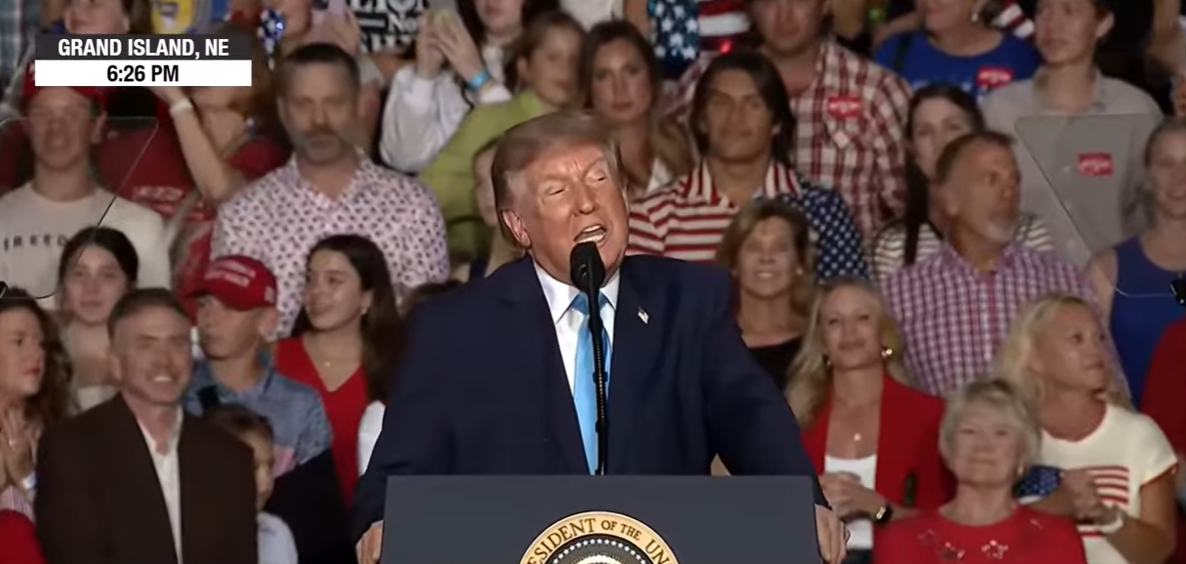
“Yeah, I think we can say that. I mean, they didn’t fly out by accident,” Trump told reporters outside the White House when asked whether a specific threat prompted the move.
“There were some threats,” he added. “And rather than tempting the enemy, we’ll capture the enemy and beat the enemy. But why should we leave them there? So we moved them around a little bit, not very far.”
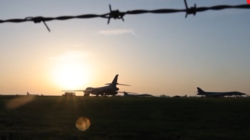
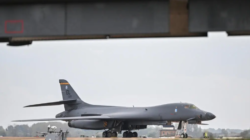
The Pentagon had confirmed that U.S. bombers deployed at RAF Fairford had returned to their home stations in the United States. The aircraft included B-1 bombers that had played an important role in recent American military operations against Iran.
Trump went further when pressed about the nature of the threat, saying U.S. authorities knew who was behind it.
“We had a threat, and if we’re going to be threatened, we just move them, and that sort of alleviates that,” Trump said. “And we actually know the people that made the threat.”
He did not identify the individuals or provide evidence publicly linking them to a specific organization. U.S. officials also have not publicly disclosed the full intelligence that triggered the decision.
Trump and Rubio Give Different Explanations
The president’s comments created a notable contrast with Rubio’s earlier explanation.
Rubio said the movement of American military aircraft reflected the normal process of reallocating resources and rotating forces between locations. He also rejected a direct connection between the bomber withdrawal and the arrests near RAF Fairford.
“The Department of War is constantly reallocating resources where they need to be. There are regular rotations that happen as well,” Rubio said.
He added that officials had documented the events surrounding the security investigation but cautioned against directly tying those events to the decision to move the bombers.
The difference matters because RAF Fairford has become a strategically important location for U.S. operations involving Iran. Moving heavy bombers back to the United States reduces the number of long-range strike aircraft positioned close to the European theater, even though the aircraft can still operate globally from American bases.
The withdrawal therefore does not mean the United States has lost its ability to conduct long-range strikes. Instead, it changes the location and logistics of that capability.
RAF Fairford Security Concerns Intensify
The bomber withdrawal came days after British authorities arrested five men near RAF Fairford in an investigation involving suspected terrorist activity. A sixth person, a British-Iranian dual national, was later arrested in connection with the investigation.
All six suspects were subsequently released on bail while the investigation continued. Police found petrol during the operation but did not find explosives in the vehicles searched.
The arrests fueled concerns about whether the base had become a target because of its role in U.S. military operations against Iran. Iranian officials have denied involvement in the suspected plot.
Trump’s latest remarks add another layer to the investigation because he explicitly acknowledged that American authorities had received a threat serious enough to justify moving the bombers.
British officials have maintained that RAF Fairford remains secure and that authorities continue to assess the situation.
The question now is whether the threat Trump described represents the same security concern that prompted the arrests near the base, a separate warning, or a broader intelligence assessment.
So far, the U.S. government has not provided enough information to establish that connection publicly.
What the Withdrawal Means for US Military Operations
RAF Fairford has long served as a key forward operating location for U.S. strategic aircraft in Europe. Its geographic position gives American forces greater flexibility when operating across Europe and the Middle East.
The return of the bombers to U.S. bases therefore carries operational consequences even if Washington can maintain its strike capability from other locations.
Trump characterized the relocation as a relatively simple precaution.
But moving a large number of strategic aircraft, crews and supporting personnel involves substantial logistical planning. The decision also raises questions about the security of other U.S. military assets remaining in Britain, including aircraft and personnel at RAF Fairford and other American-linked facilities.
That issue becomes more significant if the threat remains active.
Trump’s comments suggest that Washington considers the potential danger serious enough to avoid leaving high-value bomber aircraft exposed at the British base.
At the same time, Rubio’s insistence that military rotations and redeployments are routine indicates that the administration does not want to publicly frame the move solely as a retreat from a security threat.
The conflicting explanations leave an important question unanswered: how much of the bomber withdrawal resulted from ordinary force rotation, and how much resulted from intelligence warning of a possible attack?
For now, Trump’s own words provide the strongest indication that security concerns played a direct role.
The president’s message was straightforward: if American aircraft face a credible threat, Washington would rather move them out of danger than wait for an attack.
“We had a threat,” Trump said.
That statement changes the significance of the RAF Fairford withdrawal. What initially appeared to be a routine military redeployment now carries the added weight of a security decision made against the backdrop of heightened U.S.-Iran tensions and an unresolved investigation in Britain. (*)