
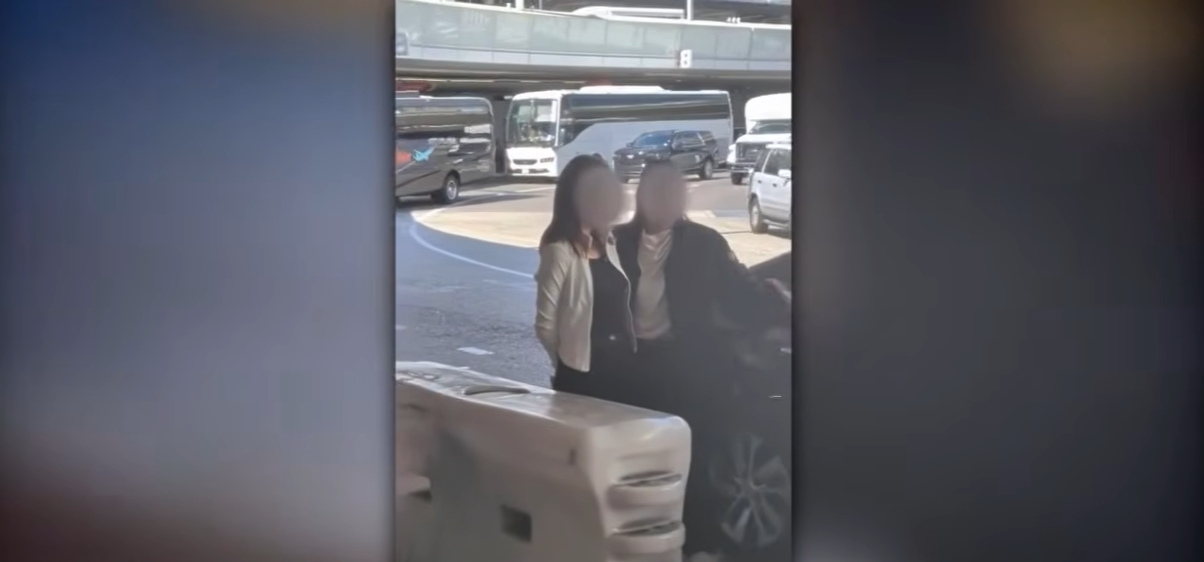
CALIFORNIA — A California real estate agent was taken into FBI custody at Los Angeles International Airport just as she prepared to leave the United States for China, after federal prosecutors accused her of carrying out surveillance for Chinese officials.
Wanying “Heather” Zhang, 34, of Irvine, California, faces a federal charge of acting as an unregistered agent of the Chinese government.
Authorities allege Zhang traveled to Seattle in 2025 at the direction of Chinese officials and conducted surveillance on a close relative of a Taiwanese government official. The person reportedly targeted was Lai Ting-yu, a U.S.-based son of Taiwan President Lai Ching-te.
Investigators allege Zhang gathered photographs, videos and vehicle license plate information and sent the material to contacts connected to Chinese authorities.
She was arrested Sunday at LAX before boarding a flight to Shanghai, according to federal officials. Zhang was expected to make her first appearance in federal court in Los Angeles on Monday.
The case adds to growing U.S. concerns about alleged Chinese intelligence and influence operations targeting political opponents, Taiwanese officials and their relatives on American soil.
FBI Says Zhang Worked at the Direction of Chinese Officials
Federal prosecutors say Zhang did not simply gather information independently.
According to the allegations, she traveled to Seattle under instructions from Chinese officials and coordinated the surveillance with another person.
First Assistant U.S. Attorney Bill Essayli said investigators found evidence that Zhang used methods designed to avoid detection.
“She coordinated the trip with an associate and used tradecraft to avoid detection,” Essayli said.
He also alleged that Zhang never disclosed to the U.S. government that she was acting on behalf of a foreign government, which prosecutors say forms the basis of the federal charge.
The allegations remain accusations at this stage. Zhang has not been convicted of espionage or any other crime.
Target Was Son of Taiwan’s President
The alleged surveillance focused on a close relative of a Taiwanese government official, but authorities later identified the target as Lai Ting-yu, a son of President Lai Ching-te who lives in the United States.
The FBI alleges Zhang photographed and recorded the family’s home and vehicles and collected license plate information.
The alleged operation did not target a random private citizen, according to prosecutors. It involved the family of Taiwan’s sitting president, adding a diplomatic dimension to the case.
Taiwan’s government strongly condemned the alleged surveillance.
Presidential Office spokeswoman Karen Kuo described the incident as a “typical case of transnational repression” and thanked U.S. authorities for protecting Taiwanese citizens.
Taipei also accused Beijing of using intimidation and surveillance beyond China’s borders against people connected to Taiwan.
Arrest Comes Amid Rising U.S.-China Tensions
The Zhang case comes as American authorities intensify their focus on alleged Chinese intelligence operations inside the United States.
Federal investigators have pursued cases involving alleged political influence, technology transfers, illegal exports and surveillance operations connected to Chinese interests.
The FBI has repeatedly warned that Beijing’s intelligence services and affiliated networks seek access to sensitive American technology and information while also monitoring Chinese and Taiwanese political opponents living in the United States.
The latest case is particularly sensitive because it allegedly involves surveillance of the family of Taiwan’s president.
China considers Taiwan part of its territory and strongly opposes President Lai, whom Beijing views as a supporter of Taiwan’s separate identity.
Washington maintains unofficial relations with Taipei and has repeatedly emphasized the importance of peace and stability across the Taiwan Strait.
China Disputes the Characterization
Chinese authorities have rejected the characterization of the case as evidence of a Chinese espionage operation.
The dispute highlights the broader geopolitical tension surrounding accusations of Chinese transnational repression in the United States.
Beijing has frequently accused Washington of using espionage allegations to smear China, while U.S. officials argue that Chinese intelligence activity poses a serious national security threat.
The Zhang case will now move into the federal court system, where prosecutors will have to establish the allegations against her.
Previous Cases Involving Taiwan
The arrest also follows other U.S. cases involving alleged surveillance of Taiwanese political figures.
Earlier this year, a California man received a four-year prison sentence after authorities accused him of spying for China and surveilling former Taiwanese President Tsai Ing-wen during her 2023 visit to California.
U.S. officials have described such operations as part of a broader effort by Beijing to monitor or intimidate Taiwanese political figures and supporters abroad.
The cases have drawn increased attention because alleged operations sometimes occur far from Taiwan itself, including inside the United States.
Federal Authorities Issue Warning
FBI Director Kash Patel used the arrest to issue a warning to foreign governments considering intelligence operations inside the United States.
“Foreign adversaries take note, America is no longer a safe place to run your espionage operations,” Patel said.
He added that the FBI would continue pursuing threats to U.S. national security.
“The FBI is hunting threats to our national security wherever they hide and bringing them to justice,” Patel said.
The statement reflects the increasingly aggressive tone U.S. authorities have adopted toward suspected foreign intelligence operations.
What Happens Next for Zhang?
Zhang’s arrest does not mean prosecutors have already proven that she committed espionage.
The federal charge centers on the allegation that she acted as an agent of a foreign government without registering as required under U.S. law.
Prosecutors will now have to present evidence supporting their case, while Zhang will have an opportunity to challenge the allegations in court.
The case could nevertheless have implications far beyond one defendant.
If prosecutors establish that Zhang acted under the direction of Chinese officials to monitor the family of Taiwan’s president, the case would provide another example of how the growing U.S.-China rivalry can reach directly into American communities.
For Washington, the arrest sends a clear message that alleged foreign intelligence operations will face federal scrutiny.
For Taiwan, it highlights a different concern: political pressure from Beijing may not stop at Taiwan’s borders.
And for Zhang, the trip to China that began as an ordinary departure from Los Angeles has instead ended with an FBI arrest and a federal criminal case that could become another major test of how aggressively the United States responds to alleged Chinese intelligence activity on American soil. (*)