
WASHINGTON — Two unidentified military transport aircraft reportedly entered Iran with their transponders switched off, fueling fresh speculation over what Tehran may be moving behind the scenes as tensions with Washington intensify.
One of the aircraft reportedly landed at Mehrabad Airport in Tehran early Sunday. Aviation observers identified the aircraft as a C-130-type transport plane, but its operator, point of origin and cargo remain unknown. The aircraft reportedly arrived without a publicly visible transponder signal, making its flight difficult to track through ordinary civilian aviation systems.
That uncertainty has created a vacuum for speculation.
Some social media accounts have claimed the aircraft transported previously frozen Iranian funds through Turkey. There is no independent evidence supporting that claim, however, and no publicly available cargo manifest or official statement has established that money was aboard the aircraft.
The second reported military transport arrival is even less clear. No reliable information has established its aircraft type, operator, departure point or cargo.
For now, the flights are best understood as unexplained military aviation activity rather than evidence of a specific covert operation.
That distinction matters because Iran operates C-130 Hercules aircraft of its own, and Mehrabad serves an important military and transport role. A C-130 appearing at the airport therefore does not automatically indicate that a foreign government sent the aircraft into Iran.
Still, the timing has attracted attention.
The reported flights came as the United States and Iran faced renewed military tensions, with Washington adjusting its forces around the Middle East and U.S. officials weighing the possibility of further action against Tehran.
Why the Mystery Flights Matter
Military transport aircraft can perform a wide range of missions, from moving personnel and spare parts to delivering humanitarian supplies, weapons and other sensitive equipment.
Without a confirmed aircraft registration or cargo manifest, analysts cannot determine which category applies to the reported flights.
The lack of a public transponder signal also does not prove that the aircraft was attempting to evade detection by military authorities. Military aircraft routinely limit publicly broadcast tracking information for operational-security reasons.
The available evidence therefore supports only a narrow conclusion: an aircraft believed to be a C-130 landed at Mehrabad without a publicly visible transponder signal.
Everything beyond that remains speculation.
That has not stopped the flights from becoming part of a much larger geopolitical narrative.
Iran and the United States are operating in an increasingly tense environment, and unusual movements of military aircraft naturally attract greater scrutiny when both sides are preparing for possible escalation.
The Bigger Signal Is Iran’s Military Environment
Mehrabad is particularly significant because Tehran’s military aviation infrastructure has long operated from the airport.
Iran has historically based C-130 transports there, meaning an Iranian military logistics mission remains one plausible explanation for the reported arrival.
A foreign transport aircraft would represent a more consequential development, but the available information does not establish that scenario.
The same problem applies to the claims about frozen Iranian funds.
The idea that previously restricted Iranian money could have traveled through Turkey aboard an aircraft is circulating online, but the claim lacks documentary evidence. There is no confirmed information identifying the aircraft’s owner, its route through Turkey or the nature of any cargo it carried.
That makes the money theory impossible to treat as established fact.
The more important question is whether the reported flights form part of a coordinated logistics operation.
At this stage, there is no evidence proving that they do.
U.S. Bomber Withdrawal Adds to the Tension
The mystery flights appeared as Washington made a striking military decision thousands of miles away.
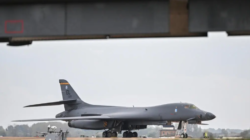
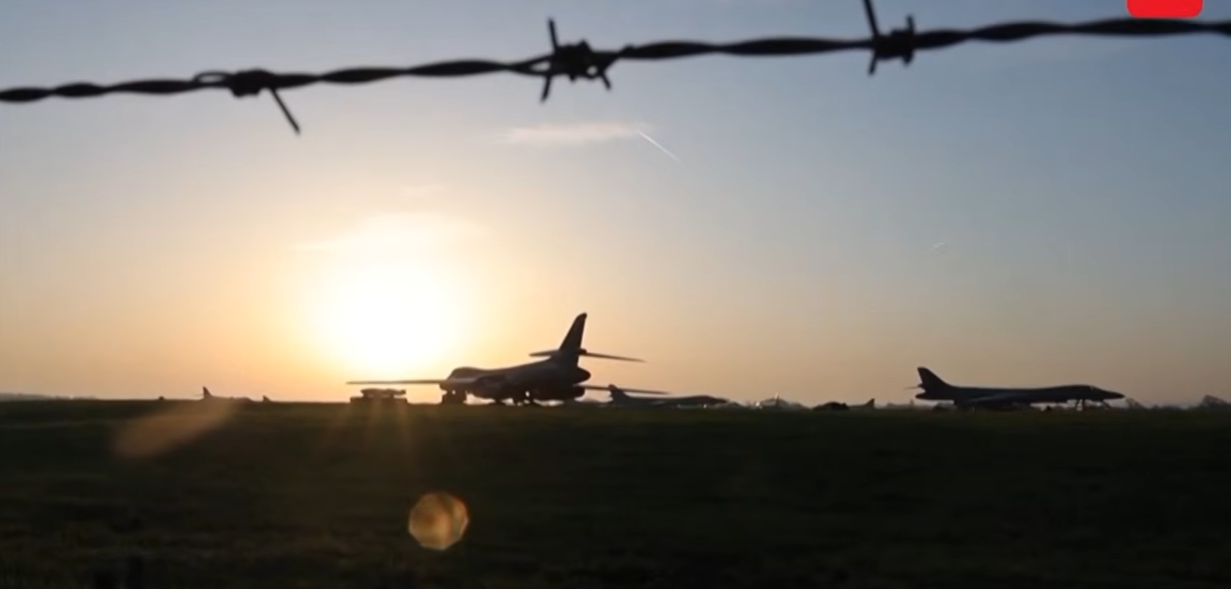
The United States withdrew its B-1 bombers from RAF Fairford in England after U.S. commanders received intelligence about a potential security threat involving the base.
The Pentagon confirmed that all American bombers deployed at Fairford had returned to their home stations in the United States. The move followed the arrest of six people in Britain in connection with an investigation into suspicious activity near the base.
The aircraft withdrawal is significant because RAF Fairford serves as a forward operating location for U.S. long-range bombers.
Moving the aircraft back to the United States does not remove America’s ability to conduct long-range strikes. It does, however, increase the distance between the bombers and potential targets in the Middle East.
That means additional flight time, greater dependence on aerial refueling and more complicated logistics if Washington decides to resume large-scale air operations.
The timing has therefore raised questions about the broader U.S. force posture.
The Fairford Investigation Points Toward Iran
The security scare at RAF Fairford began on September 27, when British police arrested five men after reports of suspicious activity involving three vans near the base.
Police evacuated about 85 nearby homes while they searched the vehicles. Investigators found petrol but no explosives.
A sixth suspect, a British-Iranian dual national, was later arrested. All six suspects were subsequently released on bail while the investigation continued.
British authorities have not publicly established exactly what the suspects intended to do.
But Prime Minister Andy Burnham said investigators had found indications of an Iranian connection.
“There is indeed a strong indication that Iran played a part,” Burnham said.
He immediately emphasized the uncertainty surrounding the investigation, adding: “This remains, though, a complex and very serious police investigation.”
Iran has categorically rejected the allegation.
Tehran has argued that Britain is relying on claims that have not been independently verified and has suggested that the accusations could form part of a broader effort to portray Iran as responsible for attacks abroad.
That leaves the Fairford case unresolved.
Why Washington Took the Threat Seriously
The withdrawal of the B-1 bombers suggests that U.S. commanders did not want to leave high-value aircraft exposed while British authorities investigated the threat.
The decision does not necessarily indicate that an attack against the base was imminent.
Instead, it reflects a basic military calculation: when an aircraft worth hundreds of millions of dollars can operate from another location, commanders may decide that the operational advantage of keeping it forward deployed is not worth the security risk.
RAF Fairford is particularly valuable because of its long runway and strategic location.
The base has supported U.S. operations in several Middle Eastern conflicts and has served as an important staging point for American long-range aviation.
Removing the bombers therefore creates an operational disadvantage even if it is only temporary.
A Wider Military Puzzle Is Taking Shape
The mystery aircraft in Iran and the U.S. bomber withdrawal from Britain are not necessarily connected.
There is no evidence establishing that the two developments form part of the same operation.
But they illustrate the same underlying reality: military planners on both sides are adjusting to a more dangerous security environment.
Iran needs to protect its military infrastructure and maintain its ability to move personnel and equipment.
The United States, meanwhile, must decide where it can safely position aircraft and other high-value assets without exposing them unnecessarily to attacks or sabotage.
That calculation becomes even more complicated as Washington expands its naval presence in the region.
The arrival of additional U.S. naval forces would give Washington more options if the White House decides to resume military operations against Iran. At the same time, it would increase the number of American assets that Iran could potentially seek to threaten.
Mystery Flights Are Not Proof of a Secret Deal
The most dramatic online theory surrounding the Tehran flight involves Iranian funds allegedly moving through Turkey.
But the evidence does not support presenting that theory as fact.
A C-130 is a military transport aircraft, and its presence at Mehrabad does not reveal what it carried. Even the aircraft’s nationality has not been independently established from the publicly available information surrounding the sighting.
Iran itself operates C-130s, making a domestic military flight a plausible explanation.
Until authorities identify the aircraft, its route and its cargo, claims about frozen money, foreign deliveries or a covert financial arrangement should remain labeled as unverified.
That is particularly important in a rapidly changing military environment, where a single unidentified aircraft can generate dozens of competing narratives within hours.
The Real Question Is What Happens Next
The mystery surrounding the aircraft will likely matter less than what follows.
If additional unidentified military transports arrive in Iran, analysts may begin looking for a broader logistics pattern.
If the aircraft prove to be routine Iranian military transports, the current speculation will likely fade.
But if investigators eventually establish that foreign aircraft entered Iran carrying sensitive cargo, the political implications would be much larger.
The same applies to RAF Fairford.
If the B-1 bombers return to Britain after the security investigation concludes, the withdrawal may prove to be a temporary precaution.
If they remain in the United States for an extended period, Washington may have decided that the threat environment around its European bases has fundamentally changed.
For now, both developments remain pieces of an incomplete puzzle.
The reported C-130 arrival at Mehrabad is real enough to warrant attention, but its mission remains unknown. The alleged delivery of Iranian funds through Turkey remains unverified. The second aircraft remains unidentified.
Meanwhile, the United States has moved its bombers away from a strategically important British base after a serious security scare, while Britain investigates possible Iranian involvement and Tehran denies responsibility.
The clearest conclusion is therefore not that a secret operation is underway.
It is that the margin for uncertainty between Iran and the United States has become much smaller.
In an environment where military aircraft can move without public tracking data, suspected foreign-backed plots can emerge near overseas bases and both sides are repositioning strategic forces, even routine logistics movements can quickly become geopolitical signals. (*)